





 +357 25 25 1111
 Login
Login
- Home
- Blog
- Solar Panels & Class A Energy Performance in Cyprus: Net Billing and Operational Savings for Limassol Villas

Solar Panels & Class A Energy Performance in Cyprus: Net Billing and Operational Savings for Limassol Villas


With over 320 days of annual Mediterranean sunshine, integrating solar power generation in Cyprus has evolved from an optional luxury into a fundamental mechanical engineering requirement. Across Limassol’s prime residential sectors, where expansive villas and penthouses operate multi-zone VRV climate plants, underfloor heating loops, and high-capacity pool filtration pumps, a certified photovoltaic (PV) system directly safeguards the asset's operating performance and long-term liquidity.
Regulatory Standards: The Mandate for EPC Class A
Under statutory European Union directives and Cyprus municipal building regulations, all contemporary residential developments must achieve an Energy Performance Certificate (EPC) rating of Class A. This operational efficiency is achieved through integrated architectural systems:
- Thermal Façade Envelopes: External wall insulation utilizing extruded polystyrene (EPS) boards of not less than 80–100mm, coupled with advanced flat-roof thermal barriers;
- Thermally Broken Glazing: Multi-chamber aluminum architectural frames equipped with Low-Emissivity (Low-E) double or triple glazing, deflecting up to 70% of infrared solar heat gain;
- On-Site Renewable Generation: Statutory incorporation of rooftop photovoltaic infrastructure engineered to offset a minimum of 25% to 30% of the building’s baseline primary energy demand.
Official statutory building efficiency guidelines: Energy Service — Ministry of Energy, Commerce and Industry.
The Net Billing Framework: Financial Mechanics
The historical Net Metering scheme (a kilowatt-hour credit system) has transitioned across Europe to a market-linked financial model: Net Billing.
1. Instantaneous Self-Consumption: Clean solar energy generated during peak daytime daylight feeds directly into the property’s operational plant (VRV cooling, domestic pumps, and household appliances) behind the meter. This energy avoids grid transmission tariffs and is consumed at zero cost.
2. Surplus Energy Export: Unconsumed solar generation exported into the Electricity Authority of Cyprus (EAC) grid is credited against the property's account at the prevailing wholesale avoided-cost tariff.
3. Evening Grid Drawdown: Nocturnal energy imported from the national grid is billed at standard retail rates, automatically offset against the monetary credits accumulated from daytime solar exports.
Financial Underwriting for a 350 sq. m Limassol Villa:
Lacking photovoltaic arrays, annual electricity billing for central VRV climate control, swimming pool circulation, and domestic hot water averages €800 to €1,300 monthly (€5,000 to €7,500 annually).
A 10kW grid-tied PV installation (representing a turnkey capital investment of €11,000 to €14,000) generates approximately 16,000 kWh annually. This compresses annual energy outlays to €1,200–€1,800, generating net operational savings of €4,500 to €5,500 per annum and delivering full capital payback within 2.5 to 3 years.
Asset Value and Secondary Market Premiums
For executive purchasers acquiring detached hillside estates across Agios Tychonas, Kalogiri, Pyrgos, and Parekklisia, energy efficiency has become a standard due diligence checkpoint:
- Resale Value Insulation: Older residential housing lacking external thermal envelopes (EPC Class C or D) is discounted by international buyers anticipating capital retrofits of €50,000 to €80,000, triggering aggressive negotiation pressure.
- Corporate Tenancy Premium: High-earning international tenants from the ICT and fintech sectors willingly pay €400 to €600 monthly rental premiums for autonomous solar estates, anticipating heavily reduced utility liabilities.
- Preferential Green Mortgages: Commercial lenders across Cyprus (such as Bank of Cyprus and Eurobank) offer interest margin discounts of 0.10% to 0.25% for residential properties certified with an EPC Class A rating.
Technical Due Diligence: Rooftops and Inverters
When auditing an existing photovoltaic installation, an appointed civil or mechanical engineer reviews three primary engineering factors:
Azimuth and Pitch Orientation: Optimal efficiency requires southern or south-western module orientation angled at 28 to 32 degrees, free from shadow casting generated by parapets or mature trees.
Inverter Architecture: Premier residential installations employ tier-one inverters (such as SolarEdge, Fronius, or Huawei) featuring individual module power optimizers to mitigate partial shading losses.
Statutory EAC Grid Approvals: Operating a residential PV array requires formal grid-interconnection permits issued by the Electricity Authority of Cyprus. Uncertified installations expose proprietors to administrative disconnects.
Frequently Asked Questions
Can photovoltaic systems be installed on apartments or penthouses?
Yes, provided the roof terrace is designated as private exclusive-use property within the registered Title Deed (Roof Garden), or where the co-owners' Management Committee formally allocates designated communal roof footprints for individual module installation.
What routine maintenance is required for Cyprus solar systems?
Given regional dust accumulation and seasonal Saharan dust events, modules require pressure washing with demineralized water 3 to 4 times annually to maintain maximum solar irradiance absorption.
What is the certified operating lifespan of a modern residential PV system?
Tier-one monocrystalline modules carry manufacturer power warranties guaranteeing at least 80% to 85% linear output at 25 years. Central inverters typically operate with a 10 to 15-year functional lifespan.
Searching for an Energy-Efficient Villa or Penthouse in Limassol?
Cyprus Realty Center sources vetted EPC Class A properties equipped with high-yield photovoltaic systems, delivering luxury living with minimized operational overheads.
This publication is prepared for general informational purposes concerning energy standards and property ownership in the Republic of Cyprus. Exact solar yield projections, Net Billing tariff structures, and installation payback timelines require independent assessment by certified renewable energy engineers.
Related Posts

Smart technologies are becoming the standard in new developments in Cyprus, with global spending on ..

A penthouse for rent in Cyprus often looks like the ready-made answer to the dream of living by the ..

Electricity, water, communal charges, insurance and maintenance: discover what makes up an apartment..
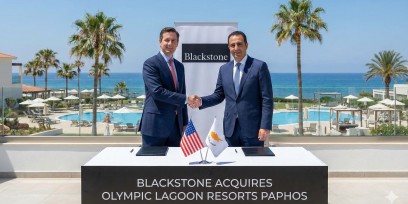
US investment giant Blackstone is entering the Cyprus market with plans to acquire the five-star Oly..